AI OCR for Logistics: Automating Bills of Lading and Shipping Documents
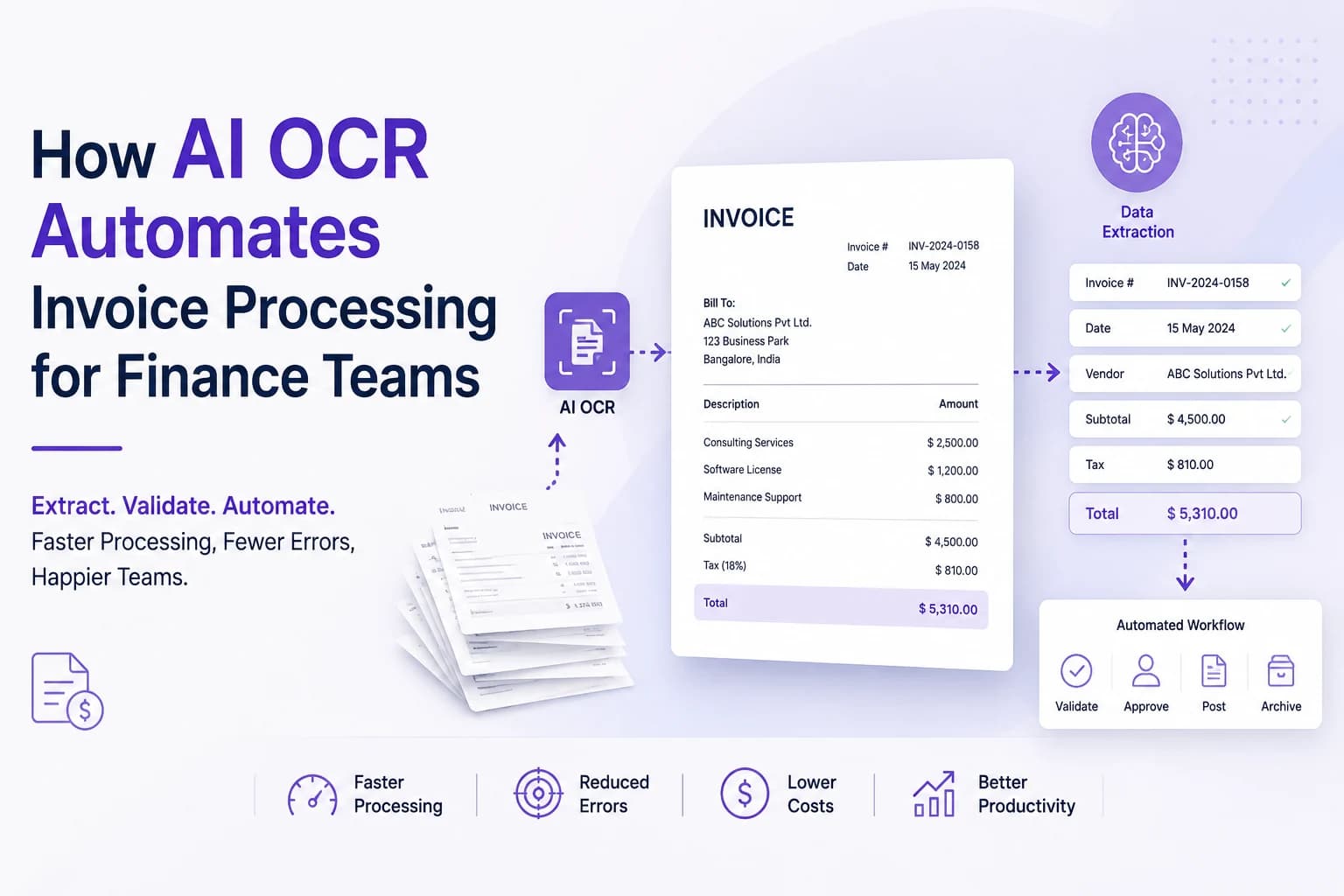
Logistics operations run on documents. Bills of lading, customs declarations, delivery notes, packing lists, and freight invoices generate millions of individual records that must be processed accurately and quickly to keep shipments moving and supply chains functioning. Manual document handling at the scale that global logistics demands creates delays, errors, and visibility gaps that cost money and damage customer relationships. AI OCR for logistics document automation is transforming this reality, enabling real-time data extraction from any shipping document format, from any carrier or origin, at any volume.
Key Takeaways
AI OCR processes bills of lading, customs forms, delivery notes, and freight invoices from any carrier or origin without pre-defined templates
Automated logistics document processing reduces data entry errors, accelerates customs clearance, and improves supply chain visibility
IdeaGCS builds custom AI OCR solutions for logistics operators, freight forwarders, and 3PLs across five global markets
The Document Problem in Logistics Operations
A mid-size freight forwarder processing 500 shipments per month handles approximately 2,500 to 5,000 individual document pages: bills of lading, commercial invoices, packing lists, customs declarations, certificates of origin, and delivery notes. Each document may come from a different carrier, shipper, or country, in a different format, with different field layouts and terminology. Manual data entry to capture the information in these documents into the TMS, WMS, or customs clearance system is slow, expensive, and introduces errors that create downstream problems.
The cost of logistics document errors extends well beyond the direct correction effort. A customs declaration error can delay a shipment at the border, creating detention charges, storage fees, and delivery penalties. A bill of lading discrepancy can delay cargo release and create disputes between carrier and consignee. Incorrect packing list data leads to warehouse processing errors and stock discrepancies. AI OCR eliminates the manual data entry step and the errors it introduces, replacing it with automated, accurate extraction that feeds directly into logistics management systems. Read our article on why manual document processing slows businesses down for the broader context.
AI OCR for Bills of Lading and Customs Documentation
Bills of lading are among the most document-diverse records in logistics. Each carrier, shipping line, and freight forwarder issues BOLs in different formats, with different field layouts, abbreviations, and terminology. A traditional OCR system requiring a template per carrier cannot scale to handle the hundreds of different BOL formats a typical freight forwarder encounters. AI OCR learns to extract the relevant fields (shipper, consignee, port of loading, port of discharge, vessel, voyage, cargo description, container numbers, and terms) from any BOL format without template configuration.
Customs documentation presents similar challenges at higher compliance stakes. Import and export declarations must accurately capture HS codes, declared values, quantities, and shipper details that feed directly into customs authority systems. AI OCR processes country-specific customs forms, CN22, CN23, and other declarations at volume with the accuracy required to avoid clearance delays. Integration with customs management systems allows extracted data to flow directly into the filing workflow without manual re-entry. Explore our guide to AI OCR use cases across industries for more logistics applications.
Integration with TMS, WMS, and Visibility Platforms
The value of AI OCR in logistics is fully realised only when extracted data flows directly into the management systems that depend on it. Integration with Transportation Management Systems enables automated shipment record creation from BOL and invoice data. Integration with Warehouse Management Systems populates inbound receipt records from packing lists and delivery notes. Integration with track-and-trace and supply chain visibility platforms enables real-time status updates from proof-of-delivery data extracted from signed delivery notes.
IdeaGCS builds API-first AI OCR solutions for logistics operators that connect to leading TMS platforms including Oracle TMS, SAP TM, and specialist freight forwarder systems, as well as WMS platforms including Manhattan, Blue Yonder, and SAP EWM. The integration layer handles field mapping, data transformation, and exception routing for documents where extracted data falls below the confidence threshold. Contact IdeaGCS to discuss your logistics document automation requirements.
Business Benefits of AI OCR in Logistics
The operational benefits of AI OCR in logistics compound across multiple dimensions. Data entry cost per shipment document falls by 70 to 85 percent as manual input is replaced by automated extraction. Customs clearance speed improves as accurate declarations are filed more quickly. Supply chain visibility improves as delivery confirmation data is captured from POD documents in near real-time rather than at end-of-day batch processing. Dispute resolution accelerates because all document data is accurately captured and searchable from the point of processing.
Carrier and supplier onboarding timelines shorten significantly. Rather than waiting for a new carrier's BOL format to be added to a template library, an AI OCR solution handles any new format from the first document received, with accuracy improving as more examples are processed. This flexibility directly supports the supply chain diversification strategies many logistics operators are pursuing to reduce dependency on single carriers or origins. IdeaGCS AI and data services include logistics-specific AI OCR development for freight forwarders, 3PLs, and enterprise supply chain teams.
AI OCR is transforming logistics document processing by replacing manual data entry with automated, accurate extraction from any document format at any volume. Bills of lading, customs declarations, delivery notes, and freight invoices all present the kind of format diversity that makes traditional OCR approaches inadequate. AI OCR handles this diversity natively, delivering real-time data visibility, reduced errors, faster clearance, and lower processing cost across every logistics document workflow. IdeaGCS builds logistics-specific AI OCR solutions for freight forwarders, 3PLs, and enterprise supply chain teams. Explore our AI and data services for details.
Frequently Asked Questions
How does AI OCR work for logistics documents?

AI OCR uses deep learning models to extract data from logistics documents including bills of lading, customs forms, packing lists, and delivery notes. Unlike traditional OCR, AI OCR handles any carrier or origin document format without predefined templates, integrating extracted data directly with TMS and WMS systems.
Can AI OCR process bills of lading from any carrier?
Yes. AI OCR handles any bill of lading format from any carrier, shipping line, or freight forwarder without requiring template configuration. The model is trained to recognise shipper, consignee, port, cargo, and terms fields regardless of layout variations across hundreds of different BOL formats.
How does AI OCR help with customs clearance?
AI OCR automates extraction of HS codes, declared values, quantities, and shipper data from customs declarations, reducing the time and error rate in filing. Accurate declarations prepared more quickly reduce the risk of customs hold delays, detention charges, and compliance penalties.
What logistics systems can AI OCR integrate with?
IdeaGCS AI OCR solutions integrate with Oracle TMS, SAP TM, Manhattan WMS, Blue Yonder, and other logistics management platforms through REST API connections. Extracted document data feeds directly into shipment records, receipt processing, and visibility platform updates.
How accurate is AI OCR for shipping documents?
AI OCR achieves 95 to 99 percent field-level accuracy for printed shipping documents. For handwritten or degraded documents, accuracy depends on training data quality. IdeaGCS validates accuracy against your specific document population before production deployment.
What is the ROI of AI OCR in logistics?
Logistics operations typically recover AI OCR investment within 6 to 12 months through reduced data entry labour, lower customs error costs, faster clearance, and improved supply chain visibility. The saving compounds as shipment volumes grow without requiring proportional increases in document processing staff.
Can AI OCR handle multi-language shipping documents?
Yes. Multi-language AI OCR processes shipping documents in English, Chinese, Arabic, Spanish, and other languages when trained on representative multilingual samples. This capability is valuable for logistics operators handling international shipments from multiple origins.
Does AI OCR work for digital and paper shipping documents?
Yes. AI OCR processes both native digital documents (PDF, EDI) and scanned paper documents. Image pre-processing corrects quality issues in scanned documents before extraction, ensuring consistent accuracy regardless of whether the source document is digital-native or a physical scan.
Contact Us
Share on Social Media
Contact Us